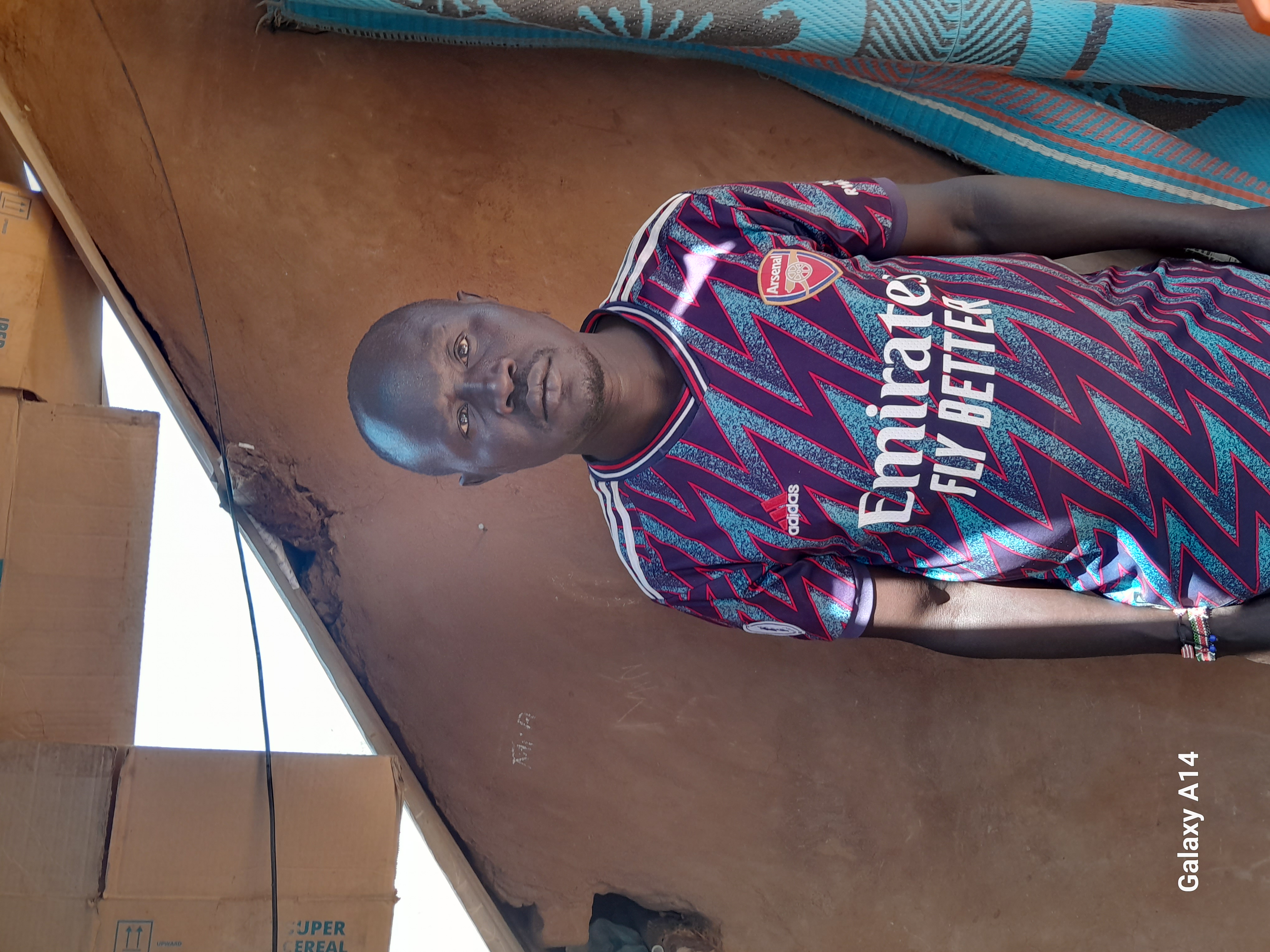
A Story of Survival and Resilience
In the heart of Kakuma Refugee Camp, amidst the dust and
uncertainty, lives Dominic Odwa, a man whose story is a testament to
the strength of the human spirit. Born in South Sudan, Odwa’s life
has been shaped by war, personal tragedy, and an unwavering
commitment to education. His journey from the battlefields of his
homeland to the classrooms of Kakuma is both heartbreaking and
inspiring, reflecting the struggles of thousands of refugees who
seek safety and a future beyond war.
Odwa’s journey to Kakuma began under tragic circumstances. Like many
others from South Sudan, he was caught in the crossfire of a brutal
civil war that had engulfed the country for decades. The war stole
from him everything he once knew—his home, his sense of security,
and most devastatingly, his family.
In 2011, Odwa’s life took an even darker turn when he was shot on
his index finger by a man who had married his brother’s widow. This
act of violence was not just an attack on his body but a wound to
his very spirit. His brother had already perished in the war, and
his sister had been forcibly married to a soldier, a fate all too
common for young girls in war-torn regions. With no safe place left
for him in South Sudan, he knew his only hope was to flee.
The journey to Kenya was perilous. With little to no resources, Odwa
and others fleeing the conflict had to traverse harsh landscapes,
evade armed groups, and endure days of hunger and exhaustion. But he
was determined—he had to survive. Eventually, he arrived at the
Kakuma Refugee Camp in 1998, seeking refuge and a chance to rebuild
his shattered life.
"Education is the light that war could not extinguish—I teach so the
next generation can build, not destroy."
Building a Life in Kakuma: Education as a Lifeline
When Odwa first arrived at Kakuma, he was lost and broken. The
memories of war haunted him, and the uncertainty of life in a
refugee camp loomed over him. But within him burned a determination
to not let his past define his future. He turned to education as his
refuge, his weapon against despair. Odwa found purpose as a teacher
at Mogadishu Primary School, dedicating his life to educating
children who, like him, had lost their homes and families. For him,
teaching was more than a job—it was a mission. Through education, he
believed, he could give these children something that war had tried
to take from them: hope.
However, the challenges of teaching in Kakuma were immense. With
limited resources, overcrowded classrooms, and students who bore the
scars of war, every day was a battle. Yet, Odwa pressed on. He
understood that knowledge was the key to breaking the cycle of
violence and displacement. He saw education as the only way his five
children and the children he taught could dream of a better future.
Supporting 15 family members, including his own children, was no
easy task. Life in the camp meant rationed food, unreliable access
to clean water, and minimal employment opportunities. But he never
gave up. Every morning, he walked into his classroom, looked at the
hopeful faces of his students, and knew that his struggles were
worth it.
A Call for Change
Odwa’s story is just one among thousands in Kakuma. He represents the
unbreakable spirit of refugees who have lost everything yet continue
to fight for a better tomorrow. His story highlights the urgent need
for improved education systems, employment opportunities, and mental
health support in refugee camps.
As the world grapples with the refugee crisis, it is crucial to
recognize the voices of individuals like Odwa. His dreams for a better
future are not just personal aspirations—they are hopes for a
generation that can rebuild nations and foster peace. He reminds us
that refugees are not just victims of war; they are survivors,
educators, and leaders who, if given the opportunity, can change the
world.
For Odwa, for his children, and for every refugee who dreams of a life
beyond war and displacement, the fight continues. Their stories
deserve to be heard. Their futures deserve to be secured.